
Shetland sheep may well descend from the Soay sheep discussed in my previous post. Soay type horns have been found in archaeological digs on Shetland. Over the intervening thousands of years these sheep were crossed with Norwegian sheep brought from the west of Norway and other breeds brought up from mainland Scotland. Shetland’s association with high quality yarn meant that sheep were bred for fine, long fibres. In the 1900s work began to conserve the now unique characteristics of the breed. Small flocks were established throughout the UK with smallholders in the twentieth century and have grown in popularity since the 1970s.
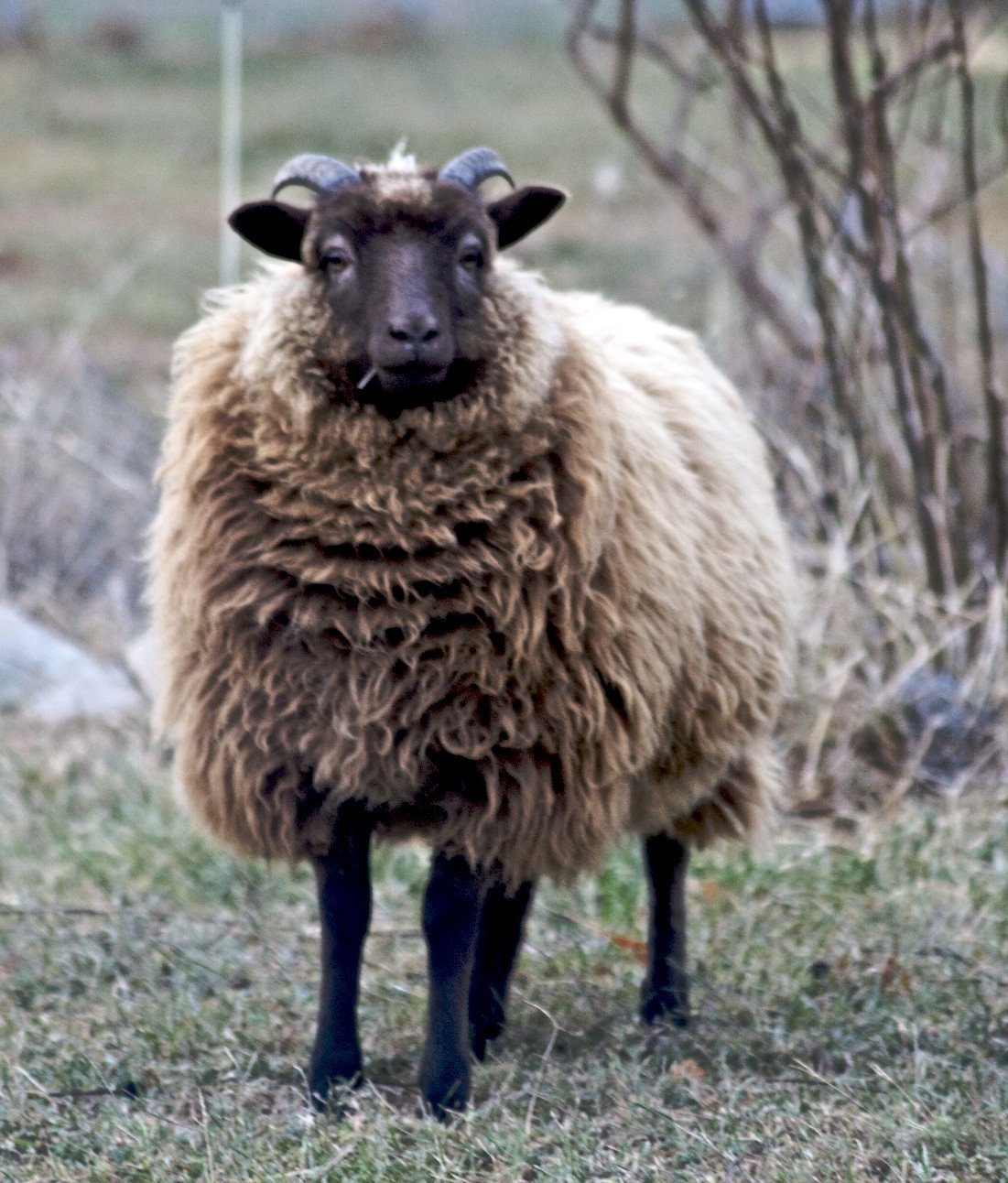
"Shetland sheep moorit" by Jean is licensed under CC BY 2.0.
Shetland sheep are small, with a light skeleton and large lungs, making them well adapted to the rugged terrain of Shetland. Their coats can vary from white to black-brown, with mottled patterns common. Regardless of colour the fleece is known for being fine, soft and strong, making it popular for spinning and knitting garments. Shetland yarn is known for being warm and hard wearing, and was even used to make the jumpers that Edmund Hillary and Tenzing Norgay wore when they conquered Everest in 1953. Made from the highest quality fleeces spun to a fine 2ply weight and knitted in Shetland by Adie and Sons, the jumpers were used as a layer between woollen vests and thick outer jackets. Currently blended with Soay fleeces our Shetland fleeces add softness and strength and a deep rich colour.
