
Soay sheep are amongst the rarest of all native sheep breeds. They are thought to be one of the original primitive sheep farmed in the UK since the Bronze age, around five thousand years ago. When the Vikings visited the Western Isles of Scotland on the way to Iceland, they named the island ‘Seðoy’ or Isle of Sheep. Over time this became the isle of Soay, one of the western-most islands in the Western Isle archipelago. Windswept and devoid of trees the island is a tough place to live. Soay has not been inhabited for many years, with the sheep living semi-wild. People from the nearby Hirta would travel to the island to collect a few sheep each year for their flock and cull others for meat. This traditional way of life continued for hundreds or potentially thousands of years until the 1930s. People may have lived on Hirta at least 2000 years ago. The population of Hirta declined in the early twentieth century as people emigrated to Australia and other’s died of disease. By the 1930s there were only 36 people left and a lack of young, fit men needed to maintain their lifestyle. The residents of Hirta were evacuated in 1930 to the mainland. Since then the Soay sheep have been left to their own devices on Soay. Since the 1930s sheep have been taken from the island and there are small flocks across the UK.
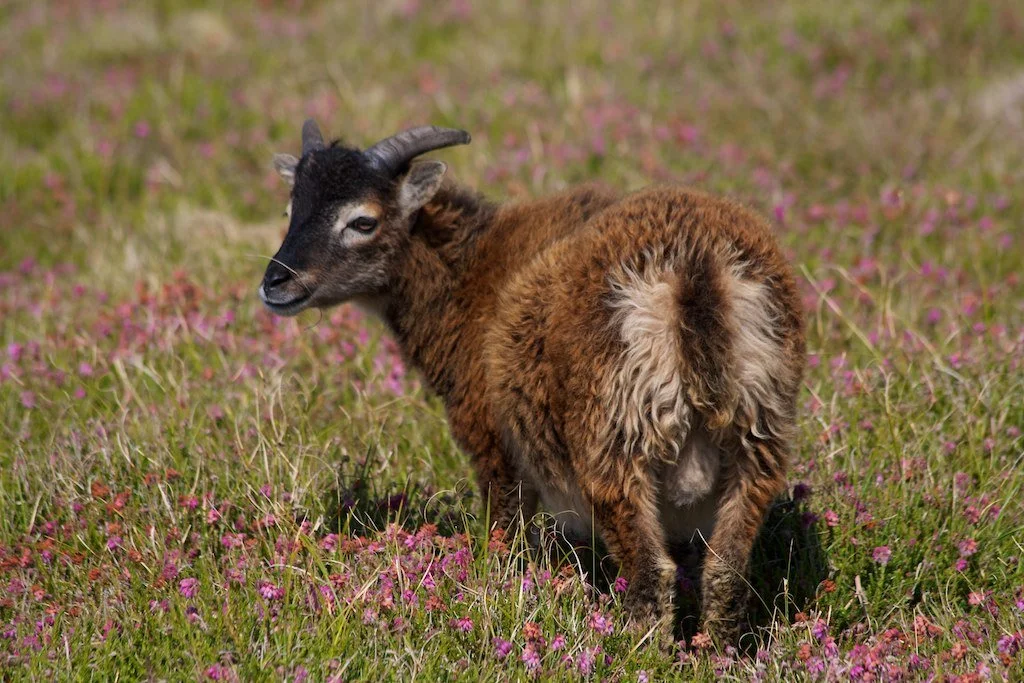
"Soay Sheep" by peteoshea is licensed under CC BY 2.0.
Soay sheep are small and agile, living on the steep cliffs of Soay. They have a fine short fleece which they naturally shed and can be collected via rooing, combing of the fleece to remove loose wool. A sheep typically produces around 1kg of fleece a year, much less than commercial sheep breeds. Their fleeces are rarely only one colour, with a mixture of black, brown and tan in each fleece, making each skein unique. The fibres are often less than 5cm long, making spinning challenging, so they often need to be blended with a longer fibre, such as the Shetland fleece we have blended ours with. As one of the oldest breeds still in the UK, in a skein of Soay wool there are thousands of years of history, tradition and one plucky sheep breed that have survived in one of the most inhospitable parts of the UK.
